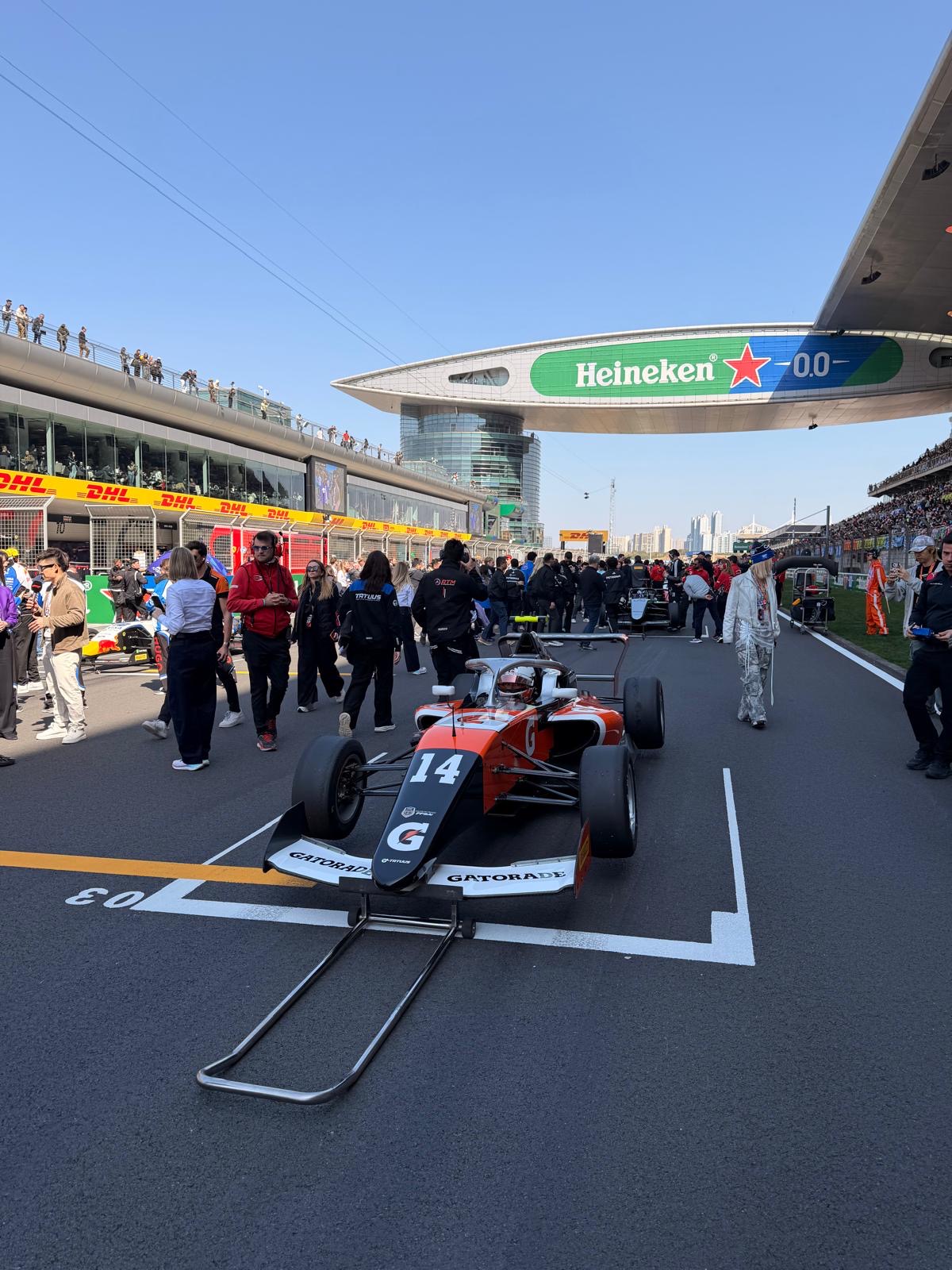
Formula 1 has ushered in a new era of the sport in 2026 with new teams, a new track and new regulations. With the season now underway, there’s plenty for fans and brands alike to keep an eye on. While the new additions have brought a reformed spectacle for the fans, they have also welcomed a new hunting ground for brands looking to stand out in what is the fastest-growing major sport in the world. Given we now have an unplanned break for just over a month until the Miami Grand Prix in early May, take some time to get up to speed with what to expect for the coming season…
New Teams on the Grid – Cadillac & Audi
In 2026, Formula 1 have welcomed two ‘new’ teams to the grid. The newly formed Cadillac F1 team have made their debut and the rebranded Revolut Audi F1 Team, marking a new era for the former Sauber organisation. Their entries signal a significant evolution in the sport’s competitive and commercial landscape, contributing to one of the most diverse team rosters F1 has ever seen.
Cadillac’s arrival is particularly notable, given Formula 1’s desire to crack the US market. Cadillac is backed by General Motors and signals huge intent from the American manufacturer to compete at the highest level of global motorsports. GM has committed a substantial investment to ensure the team’s long-term competitiveness, with plans already underway to introduce its own power unit in 2029. In the meantime, the Cadillac car is powered by a Ferrari power unit, allowing them to focus on establishing themselves on the grid. Driven by Sergio Perez and Valtteri Bottas, the new team brings a wealth of experience to the grid with their driver pairing. Based on the first three races, it’s clear Cadillac has a long way to go and a mountain of work to get stuck into, but for them it’s important to keep celebrating the little wins.
By contrast, Audi has instead opted for a combination of experience and youth with seasoned veteran Nico Hulkenberg and emerging talent Gabriel Bortoleto continuing with the team. Where they have made significant changes is off-track. The team have undergone a full operational transformation, including an overhaul of their commercial department. This shift is designed to align the team with Audi’s premium global brand identity and create a partner ecosystem that reflects their ambition to establish themselves not just as a competitive force, but as a commercially leading organisation within the sport. As a new team building their own engine for the first time, they’ve had a respectable start to the season with some points on the board already!
With 11 teams now competing, Formula 1 has hit a record number of commercial partnerships for the sport, exceeding 360 commercial relationships across the Paddock [1]. This growth reflects both the sports’ expanding global audience and its increasing appeal as a marketing platform. However, it creates one of the most crowded partnership environments in the sports industry. Brands looking to activate within this increasingly crowded landscape will need to work harder than ever to stand out. Authenticity, cultural relevance, and strategic creativity will be essential for cutting through the noise and ensuring meaningful engagements with fans and potential customers.
New Partners & Brands
As the eyes on the sport have multiplied enormously over the past few years, so too has the commercial activity in the space. Whether it’s partnering with an F1 team, Formula 1 itself, or with the race promoters, brands are chomping at the bit to show up in the F1 landscape. The rapid growth in team partners has been so drastic that many teams are reaching a saturation point, where satisfying all partners is becoming an enduring task. Some teams are resorting to finding very unique partner designations to help squeeze more logos onto their cars. The Williams F1 team, for example, recently announced a multi-year partnership with Anthropic as their ‘Official Thinking Partner’. As more brands show up in the F1 space, the need to innovate in authentic ways to stand out from the crowd has become the new challenge. Brands must harness the power of fan engagement and activate in unique ways to connect with their specific target audience within the wide-reaching F1 fanbase. F1 and team partners must utilise their rights on a more intentional level rather than approaching them as a tick box, otherwise they risk getting lost among a sea of smart and forward-thinking competitors.
The leading case study demonstrating the extraordinary growth in the F1 commercial landscape is the McLaren F1 Team. At the start of the 2018 season, the MCL33 driven by Fernando Alonso and Stoffel Vandoorne rolled out of the garage with a car virtually bare of sponsors – only small logo placements for their five or so sponsors showed. Fast forward to 2026, and McLaren now supports a roster of 53 partners across a wide range of industries, from alcoholic beverages to global banking.
In tandem with the F1 partnership space booming, the broadcast environment has also seen considerable growth in the value of broadcast rights packages. The biggest news in this space came late last year, when Apple TV was announced as the Official U.S. Broadcaster of Formula 1 on a five-year agreement worth a reported $750 million ($150 million per year). This number significantly outbids the previous agreement between F1 and ESPN of $80 million per year. From a brand perspective, this considerable rise in media rights value highlights the huge opportunity to show up visually in front of the 800 million viewers across a season. Whether through trackside signage or broadcast rights, the opportunity for brand awareness is considerable – not to mention the additional peripheral visibility through digital channels and Netflix’s Drive to Survive.
Significant Regulation Changes in 2026
For the 2026 F1 season, you’ve probably noticed there are some changes. Specifically, we are now undergoing the most significant regulatory changes the sport has ever seen, with an overhaul across the aerodynamics, power units (engines), and on-track racing.
The cars firstly look a little different thanks to the aerodynamics changing from the nose all the way to the rear wing. The cars are slightly lighter and smaller with thinner tyres intended to improve racing and allow the cars to race wheel-to-wheel more easily. The power units have also become 50% combustion-powered and 50% electric-powered, meaning they are well and truly hybrid machines.
F1 have also implemented new racing ‘modes’ at the drivers’ disposal that they can harness throughout the race weekend. Specifically, Overtake Mode, Boost Mode, Straight Mode and Recharge Mode have all been implemented following the new regulations and the technical novelties they bring. If you’ve tuned in for the first few races or stayed across the developments, you will know that some drivers and fans are still undecided on the new modes and the impact on racing while others have enjoyed the more exciting on-track action.
With new regulations come new opportunities in the commercial space too. It’s common to see a shake-up of the competitive order, potentially bringing new teams into the fold that used to compete towards the back of the field. For brands, this presents an exciting opportunity to partner with high-performing teams at a relatively low cost. If we cast our minds back to 2009, a regulation change saw Brawn GP team leapfrog from 9th in the standings as Honda, to being the leader of the pack within a few months. As a new team, they had almost zero sponsors, resulting in a frantic rush to sign new deals on a race-by-race basis, with the most famous of these being Virgin. Based on the race results so far, it’s unlikely we’ll see a Brawn-style shake-up, but it’s worth keeping an eye on the new teams as they develop.
Reformed Race Calendar – Madrid Added In, Bahrain & Saudi Arabia Cancelled
Formula 1 is often described as a travelling circus, reaching five continents and more than 21 countries across its 24‑race calendar. Each season brings rumours of new destinations eager to join the lineup, and in 2026 the sport will debut an all‑new circuit in Madrid, Spain. The Spanish Grand Prix will move to the Madring, a purpose‑built venue currently under construction. With a capacity of 110,000, the race promoters promise a dynamic fan experience both on and off the track, featuring a technical layout and unique event offerings. This provides brands and partners with a brand-new environment to activate and reach both the Spanish and wider European audience – this time from an urban location. We’ll have to wait until September, and the lights go out, to see how the race measures up to the other iconic events across the F1 season.
One development we’ve seen this season is the cancellation of the Saudi Arabian and Bahrain Grands Prix due to the conflict in the region. As two of the four races in the Middle East, this reduces the calendar’s geographic diversity and has created considerable ramifications across the commercial landscape. With Saudi Arabia and Bahrain being two of the highest paying race promoters, F1 is reportedly losing out on over $100 million in host fees, with the total revenue impact reaching $200 million [2] once broadcasters, teams and commercial partners are factored in. Removing just two races from the calendar has caused major disruption to rights delivery for F1’s 26 Global and Official Partners, and F1 will have to re-allocate these rights to other races, or in other formats. It’s a reminder that global sports like F1 bring huge opportunity but also significant risk – and brands and rights holders must be ready to react when the unexpected happens.
The Bottom Line
F1’s landscape has matured beyond the point where mere presence delivers value. The introduction of new teams, regulatory changes and calendar adjustments create both complexity and opportunities for brands to navigate throughout the remainder of the 2026 season.
[1] https://sector.world/2026/02/what-the-grid-reveals-about-f1s-commercial-structure/
[2]https://www.sportspro.com/news/major-events/f1-middle-east-bahrain-qatar-saudi-arabia-march-2026/#:~:text=According%20to%20an%20analyst%20report,%2452%20million%20that%20Bahrain%20contributes.