
Once considered a niche motorsport with a predominantly European following, Formula 1 has exploded into a global phenomenon in recent years, fuelled in large part by Netflix’s Drive to Survive. F1: The Movie builds on this momentum, delivering cinematic excitement but also a deeply authentic, culturally resonant portrayal of the world of modern Formula 1. The film leverages this unique cultural moment for the sport, using the global fascination inspired by Drive to Survive as a springboard and leaning into what fans love most: real access, real emotion and real racing.
But this is more than just a film – it’s a cultural inflection point. F1: The Movie blurs the lines between sport, entertainment, and storytelling, offering a new blueprint for how sports properties can engage fans beyond the track. It signals a shift from passive sponsorship to active participation in the stories fans care about.
From the first email, when director Joseph Kosinski reached out to seven-time world champion Lewis Hamilton, the vision was clear; to make something real and accurate. Hamilton, who served as a producer, was instrumental in ensuring the film mirrored the identity of the sport. To achieve this, a fictional “11th team” was created, APXGP, fully integrated into the 2023 and 2024 F1 seasons with its own motorhome, garages, team sponsors, and interacting seamlessly with real teams and drivers across specific race weekends. The two lead actors, Brad Pitt and Damson Idris, trained to drive modified F2 cars designed to look and feel like F1 vehicles. This realism, supported by a specially developed camera system tailored to the unique demands of high-speed racing, deliver a radical on-track perspective bringing audiences and fans closer than ever to the speed, precision and experience of Formula 1.
The authenticity of F1: The Movie is amplified further through the film’s commercial integration which mirrors the business engine that drives modern Formula 1. APXGP’s team livery features real sponsors including MSC Cruises, Expensify, SharkNinja, and Tommy Hilfiger – brands that clearly recognise the sport’s growing global influence. These partnerships go beyond simple product placement; they’re part of a larger ecosystem positioning F1 as an ideal platform for premium, lifestyle-driven marketing.
Tommy Hilfiger stands out as a brand that has maximised the sponsorship with a bold activation strategy not only designing the APXGP team suits, but launching a capsule collection inspired by the film. The brand integration reached a new level at the 2025 Met Gala where Damson Idris arrived in a real APXGP car wearing a bespoke Tommy Hilfiger racing suit and a Swarovski-crystal-encrusted helmet. On the red carpet, two assistants performed a “pit stop,” removing Idris’ racing suit to reveal a tailored Tommy Hilfiger suit underneath, aligned to the evening’s theme. The Met Gala appearance was more than just a viral spectacle, it was part of a fully integrated marketing campaign. The APXGP Collection, modelled by Idris, is now being marketed worldwide, with a global out of home and digital campaign rolling out across multiple channels, amplifying brand visibility and connecting F1 to a broader lifestyle audience. The impact of the campaign has been noted by other sponsors, such as Expensify, who also saw a surge in brand engagement following the Met Gala reveal.
These kinds of activations serve as a gateway to new audiences. The Met Gala moment wasn’t just for motorsport fans; it was for culture-watchers, fashion enthusiasts, and digital natives who may have never tuned into a Grand Prix but instantly connected with the spectacle. By tapping into culturally charged moments, F1 and its partners are expanding the sport’s cultural footprint, through moments that feel relevant, shareable, and emotionally resonant across different verticals. As Apple CEO Tim Cook described the film, it’s “the intersection of technology and sport” – and the Met Gala moment exemplified exactly that, where entertainment, fashion, and motorsport collided on a global stage.
Some may also question the risk it poses for brands if the film doesn’t perform well or underdelivers – however, the smartest activations aren’t just betting on box office numbers. They are building campaigns that stand on their own where it isn’t a one-off product placement and are creatively valuable in their own right.
With Hamilton’s guidance, racing integration, revolutionary technology, and real-world commercial partnerships, this film sets a new standard for motorsport storytelling and marketing. F1: The Movie is more than a Hollywood drama. It’s a culturally resonant, deeply authentic celebration of Formula 1 and a global marketing platform expanding the fanbase whilst showcasing the sport’s unmatched opportunity and commercial potential. Additionally, it offers a glimpse into the future of brand storytelling – one where entertainment doesn’t just support sport, but builds the platform itself. The fictional APXGP team wasn’t an add-on: it was engineered from the ground up with brand integration at its core. That gives brands a seat at the creative table from day one, enabling deeper engagement with fans. As the lines between sport, culture, and entertainment continue to blur, F1: The Movie isn’t just a cinematic milestone – it’s a playbook for how brands can show up authentically and drive relevance.
Fuse partners with Sipsmith to launch new Wimbledon-exclusive gin, Top Seed
26th June, 2025, London – Sipsmith has appointed global sport and entertainment marketing agency Fuse as its agency for partnership consultancy and activation, as it launches Top Seed Gin to celebrate the fifth year of its partnership with Wimbledon.
The born-and-bred London gin brand has crafted a new, limited-edition signature serve exclusively for The Championships. This first-of-its-kind recipe features authentic Wimbledon Centre Court grass seeds as one of its botanicals, distilled into the liquid using the same meticulous process behind Sipsmith’s iconic London Dry Gin. A team of expert distillers handcrafted the recipe at the brand’s Chiswick distillery, where every bottle of Sipsmith gin is made.
Fuse led the creative concept for Top Seed, from ideation to exclusive launch at an event hosted by Wimbledon legend and Sipsmith ambassador, Sue Barker, where guests were treated to a behind the scenes look into how the unique gin was created.
Tennis fans will be able to order Top Seed Gin by requesting a ‘secret serve’ at the Pergola Bar. The off-menu cocktail, The Top Seed, pairs the gin with Cloudy Apple Juice, Elderflower Cordial, Supasawa and a splash of soda. Each serve will also come with a bag of Wimbledon seeds so fans can grow their own botanicals at home, making a memorable experience for tennis fans and gin lovers alike.
Fans not able to make it to SW19 will still be able get their hands on The Top Seed’s authentic grass-based mix by signing up to Sipsmith’s Sipping Society.
In the lead up to Wimbledon, Fuse is also providing end-to-end delivery support, from strategic consultancy to onsite activations at the Pergola Bar and hospitality suite. Fuse will also manage ticketing and hospitality to ensure a seamless experience for Wimbledon-goers throughout the tournament.
Danielle Barwick, Group Director at Fuse, said: “We’re thrilled to be partnering with Sipsmith to work on this iconic Wimbledon partnership. From creative ideation to on-site execution, our team is dedicated to delivering a bold, celebratory campaign that blends Sipsmith’s spirit and commitment to craftsmanship with the tradition and prestige of The Championships. We’re looking forward to one big splash this year!”
Amy Cockram, Global Senior Brand Manager at Sipsmith, said: “Fuse’s expertise and experience in creative activations, experiential events and PR makes it the perfect partner to help us celebrate our collaboration and capture the spirit of Sipsmith and the magic of The Championships. We’re excited for more truly unforgettable moments at the most prestigious global sporting event on the calendar this year. ”
ABOUT FUSE
Fuse is a global sport and entertainment agency offering marketing and commercial services for brands and rights holders. It has offices in the UK, Europe, the Americas and Asia with over 400 employees internationally, recently opening hubs in Spain, Brazil and India. Its global CEO is Louise Johnson – one of Sports Leaders Under 40 and this year’s Jury President of the Entertainment Lions for Sport at Cannes Lions. Fuse’s work has been recognised across industry leading awards including Cannes, The Sports Industry Awards and the UK Sponsorship Awards. https://fuseint.com/
Omnicom Media Group is the media services division of Omnicom (NYSE: OMC), a leading provider of data-inspired, creative marketing and sales solutions.
From left to right: Will Mason, Tom Wild, Neil Sura
20th August, London: Fuse, the global sport and entertainment marketing agency, today announced the expansion of its strategy team, marking a pivotal moment in the agency’s continued growth. Strategy has always been a cornerstone of Fuse’s approach, and this team builds on that legacy to further elevate the agency’s strategic capabilities. Tasked with driving Fuse’s new guiding proposition, Culturally Connected, Seriously Effective, they will play a key role in deepening Fuse’s ability to help engage brands with culture and audience passion points, as well as delivering meaningful impact for their clients.
The team will be headed up by Tom Wild, joining Fuse as its new Head of Strategy. Wild will oversee the team and work closely with other areas of the business to bring its holistic vision of strategy to life. Wild has fourteen years’ experience in the sponsorship and media world, previously leading strategy for Publicis Sport & Entertainment across clients such as TikTok, JPMorgan Chase, ABInBev and Samsung UK, where he held the role of Strategy Director. He also worked as Strategy Business Director at Mindshare Worldwide on Booking.com across all of their global brand marketing initiatives, including their ongoing UEFA partnership and various entertainment partnerships.
Reporting to Naomi Hall, Managing Partner at Fuse, Wild’s expertise in leading strategy teams will help inform how the team operates, focused on how Fuse delivers impactful work for existing clients and driving strategy towards new business wins for the entire agency. From shaping how brands show up in sport and entertainment to guiding how the partnerships are built, the team will sit at the heart of Fuse’s thinking and help ensure work is driven by insight, grounded in culture and delivers results. The work will be delivered for Fuse’s clients both in the UK and across the global markets.
Alongside Wild, Fuse has also appointed two new Strategy Directors, Neil Sura and Will Mason. Sura was previously the Group Strategy Director, APAC at Octagon, helping clients connect with their audiences’ passions across sport, music and culture, including Standard Chartered’s award-winning campaign with Liverpool FC. His appointment brings an international lens to the team, with his experience driving wins for both UK and global clients alike. Mason joins from Wasserman, where he held the position of Senior Director, Strategy and has expertise guiding big brands, such as Unilever, to grow presence with strategic partnerships across sports. The team reflects the agency’s commitment to embedding insight-driven thinking across its work and delivering culturally relevant activations that drive measurable results for clients.
Tom Wild shared, “Today’s consumers expect more than messages – they expect brands to add real value in their lives. Sport and entertainment offer powerful platforms for culture-shaping work that connects people and brands in meaningful ways. With the right strategy in place, brands can define their role with clarity, activate partnerships authentically, and drive greater resonance and measurable impact. I’m excited to lead Fuse’s strategy team, working in close collaboration with our clients to shape effective partnership strategies that deliver standout work and leave a lasting impression.”
Louise Johnson, Global CEO of Fuse, stated, “Fuse has always been defined by its ability to combine strategic intelligence with cultural relevance – and this team marks the next evolution of that approach. With our global proposition embedded across the agency, the addition of Tom, Neil and Will brings a new level of leadership, expertise and progressive thinking to our business. We’re excited about the future and confident this development positions Fuse for continued growth and success.”
The National League isn’t just a football division; it’s a rapidly growing commercial and cultural force. Its increasing popularity stems from a priceless sense of community and affordability, along with deep roots in the rich history of English football.
As a Lincoln City fan, this resonates deeply with me. I’ll never forget the 2016–17 season under the Cowley brothers. With cult hero Matt Rhead spearheading the attack, it wasn’t just about winning. It was about a city uniting behind a team that truly reflected its hardworking, gritty spirit. That unique, unbreakable bond between a club and its people is what makes the National League so special.
The league is no longer a hidden gem; it’s a major draw, but it has never forgotten its roots. While few clubs can replicate the global phenomenon of the Welcome to Wrexham effect, every club can take lessons from it. The show’s real power wasn’t just in its celebrity owners but in its ability to highlight how a football club can be the beating heart of its community, showcasing local heroes and uplifting the wider area.
This authentic appeal has attracted significant partners. A long-term broadcast deal with DAZN gives clubs a global stage, and title sponsorship from Enterprise will be invaluable in helping them thrive. But the league’s continued success and its appeal to brands wanting to make a real difference in the lives of ordinary people hinges on protecting these clubs. The struggles at Morecambe, for example, serve as a powerful reminder that poor ownership can threaten not just the club, but the very fabric of the community around it.
While partnerships are often measured by balance sheets or impressions, those investing in the National League experience something far deeper. By putting resources into the heart of local communities, a brand gains more than just visibility. It earns powerful brand affinity that turns customers into passionate advocates. This kind of grassroots loyalty is something no ad campaign can buy.
This is a relationship built on trust, earned by showing up for the fans, the local towns, and those at the very heart of football. This is about creating a legacy that lasts long after the final whistle.
Fuse, the global sport and entertainment marketing agency, today announced the appointment of Matt Bailey as Managing Partner within its Rights Consultancy division. Bailey joins the agency on 10th November 2025 and will report into Lucy Basden-Smith, becoming part of the Fuse Executive Leadership Team.
A seasoned sports marketing professional with over 20 years’ experience, Bailey joins Fuse from Octagon, where he most recently served as Head of Brand Partnerships. During his 14 years with the agency, he worked across a world-class roster of brands including the likes of Amazon, Cisco, UPS and Sony.
Throughout his career, Bailey has played a key role in securing, renewing and delivering partnership strategies with some of the world’s leading rightsholders such as the UEFA, The FA, NBA, ICC, ECB, LTA, Real Madrid, Liverpool FC, City Football Group and Arsenal FC.
At Fuse, Bailey will lead a client republic within the Rights Consultancy division, overseeing a portfolio of high-value accounts and driving strategic guidance, commercial leadership and operational excellence. In addition, Bailey will play a central role in the agency’s commercial growth, contributing to new business efforts, product development initiatives and leadership forums that shape the agency’s direction. While his core expertise lies in sport, Bailey will also be instrumental in expanding Fuse’s footprint across the entertainment space, identifying opportunities at the intersection of sport, music, fashion and culture.
Bailey’s appointment reinforces Fuse’s commitment to being “culturally connected and seriously effective”, ensuring the agency continues to deliver work powered by cultural intelligence with effectiveness at the core, delivering measurable impact through strategic creativity and data-led insight.
Commenting on his appointment, Matt Bailey said: “In a fragmented marketplace, the brands that break through are the ones that connect to culture – showing up where interests thrive, not just where impressions are bought. Fuse stands apart in its ability to translate these interests into authentic brand experiences. As a Managing Partner within Rights Consultancy, my priority will be ensuring relationships that advance our ability to connect brands to moments that matter most, turning cultural relevance into measurable business impact.”
Louise Johnson, Global CEO at Fuse, added: “Matt’s deep experience across sport, his strategic and commercial mindset, and his reputation for building trusted client relationships make him an exceptional addition to the Fuse leadership team. He brings not only world-class expertise, but also the collaborative and forward-thinking approach that will help drive our agency’s next chapter of growth.”
Prior to joining Octagon, Bailey began his career at IMG before moving to Leo Burnett, where he worked on McDonald’s global sports sponsorship portfolio. Over the course of his career, he has been involved in multiple award-winning campaigns, including recognition at the Sports Industry Awards and European Sponsorship Awards.
London, 11th September 2025 – Fuse, the global sports and entertainment marketing agency part of Omnicom Media Group, has announced that Lucy Basden-Smith will be joining as Managing Director, further strengthening its world-class leadership team.
Lucy brings more than 18 years of experience in sport, culture and entertainment. She has led major national and global partnerships, including EE x The Home Nations, BAFTA, Wembley Stadium, Defender x Rugby World Cup 2022 and 2023, Barclays x ATP Tennis Finals and Powerade at the Olympic Games. During her career, she has worked with some of the world’s most recognisable rights holders, including Major League Baseball, Arsenal, Premiership Rugby, World Rugby and the Women’s Rugby World Cup 2025. Her proven track record of delivering culturally relevant campaigns and building long-term client relationships will play a crucial role in driving Fuse’s global vision going forward. Lucy joins from Havas Play, where she had been Managing Director since January 2024.
As Managing Director, Lucy will be working closely and reporting into Fuse’s Global CEO, Louise Johnson, ensuring the agency continues to deliver innovative, insight-driven and measurable work. Her role is instrumental in shaping the future of the agency – championing new business, strengthening and nurturing client relationships, and guiding high-performing teams to deliver connected, effective campaigns. Additionally, Lucy will be part of Fuse’s International Executive Leadership Team and the Global Steering Group, working closely with senior leaders to drive strategic alignment across the agency’s global footprint.
Lucy will also support Fuse’s Innovation Board, enhancing employee engagement and satisfaction through progressive company initiatives, while ensuring Fuse’s business goals are met, and shaping how the agency grows
Her appointment comes at a pivotal time for Fuse, following the recent launch of its global proposition: Culturally Connected, Seriously Effective. It is designed to help brands connect with audiences through what matters most to them, driven by insight-led strategy, bold creativity and activations that deliver measurable impact, grounded in culture. The agency works with a diverse portfolio of global and local clients including PepsiCo, Vodafone, Google Pixel and most recently, Sipsmith, where Fuse delivered their Top Seed Gin campaign through creative activations, premium hospitality and immersive fan experiences at Wimbledon. Lucy’s leadership and proven ability to grow and win business ensures that Fuse is set to build on this momentum.
Commenting on her appointment, Lucy said: “It’s an incredible moment to join a company that’s charging forward with bold global expansion plans. The pace of growth and the ambition driving this journey makes it an exciting opportunity to build, scale and create impact worldwide. At Fuse, the team doesn’t just set goals, they achieve them.”
Louise Johnson added: “Lucy’s experience, ambition and understanding of the industry make her a perfect choice to strengthen Fuse’s global strategy. Her proven track record of partnering with some of the leading blue-chip brands in sponsorship, driving business growth, and fostering an inclusive and innovative culture means she is well-positioned to support our global and local brands in delivering standout sponsorship solutions.”
About Fuse
Fuse is a global sport and entertainment agency offering marketing and commercial services for brands and rights holders. It has offices in the UK, Europe, the Americas and Asia with over 400 employees internationally, recently opening hubs in Spain, India and Brazil. Its global CEO is Louise Johnson – one of Sports Leaders Under 40 and last year’s Jury President of the Entertainment Lions for Sport at Cannes Lions and most recently, named one of FT’s Women of the Year 2024. Fuse’s work has been recognised across industry leading awards including Cannes, The Sports Industry Awards and the UK Sponsorship Awards.
From left to right: Charlotte Jacques, James Tollington, Luke Bliss
8th May 2025, London: Global sport and entertainment agency, Fuse, has announced a trio of promotions as it looks to strengthen and expand its Executive Leadership team. Luke Bliss has been promoted to Managing Partner, PR & Creative, James Tollington to Managing Partner, Client, and Charlotte Jacques to Managing Partner, Events & Live Experiences.
Previously Head of PR, Luke Bliss steps into the newly created role of Managing Partner, PR & Creative. Since joining the business in 2017, Luke has grown Fuse’s specialist PR division into an award-winning service that supports several Fuse clients across their sport and entertainment sponsorships, including Google’s partnerships with Arsenal F.C. and Liverpool F.C., Vodafone’s Rugby, Tennis and Music partnerships, and Panini’s football collections, amongst others. Luke will remain focused on the continued growth of the division, with an expanded remit to unify and lead the agency’s creative capabilities into 2026.
Group Director James Tollington has been promoted to Managing Partner, Client, with a remit focused on delivering industry leading consultancy across Fuse’s largest international clients, as well as driving client growth and new business. With over 15 years at the agency, James has led major accounts such as Vodafone, Google Pixel, Nissan and Santander, and has been instrumental in negotiating some of his clients’ most high-profile sports partnerships, including Vodafone’s deals with the Welsh Rugby Union, Scottish Rugby and Wimbledon. Internally, James will be responsible for strengthening Fuse’s consultancy offering and talent, and will help shape the agency’s broader strategic direction.
Charlotte Jacques has been promoted from Partner to Managing Partner, Events & Live Experiences, where she will oversee the strategic growth and execution of Fuse’s live event and experiential offerings. With 14 years of experience in the sports and major events industry, Charlotte has worked for local organising committees, specialist event and hospitality agencies and worked with numerous governing bodies such as UEFA, FIFA, IOC and the ICC. At Fuse, Charlotte has delivered standout brand experiences for clients such as HTC, Carlsberg, UniCredit, Nissan, PepsiCo, Enterprise, Santander, and Just Eat Takeaway.com. Her work spans some of the world’s largest sport and entertainment properties and events.
The new Managing Partners will report into Louise Johnson, Global CEO of Fuse. They will be instrumental in delivering Fuse’s global proposition – Culturally Connected, Seriously Effective – using their deep expertise to connect brands to culture and drive meaningful results.
Louise Johnson said: “These promotions reflect Fuse’s commitment to career progression and development, as well as our ongoing ambition to deliver best-in-class campaigns and partnerships for brands in sport and entertainment. Luke, James and Charlotte have already significantly contributed to the growth of the business over a number of years and will now bring a wealth of experience to their new roles.”
Luke Bliss said, “Fuse is an agency with wonderfully talented people and a roster of brilliant clients and we’re immensely proud to have played a part in its growth over the past decade. Our focus now is to make sure that success continues long into the future by retaining the very best of what we do now, while evolving our products and services to consistently meet our client’s needs. There’s never been a more exciting time to work in Sport and Entertainment at one of the world’s leading agencies.”
About Fuse
Fuse is a global sport and entertainment agency offering marketing and commercial services for brands and rights holders. It has offices in the UK, Europe, the Americas and Asia with over 400 employees internationally, recently opening hubs in Spain, India and Brazil. Its global CEO is Louise Johnson – one of Sports Leaders Under 40 and last year’s Jury President of the Entertainment Lions for Sport at Cannes Lions. Current international clients include PepsiCo, Vodafone, Nissan and Philips. Fuse’s work has been recognised across industry leading awards including Cannes, The Sports Industry Awards and the UK Sponsorship Awards. https://fuseint.com/
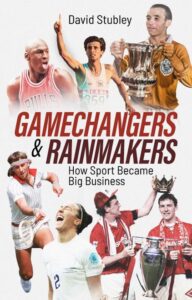
Gamechangers and Rainmakers is the story of how sport became big business, along with 40 pivotal moments that helped create a trillion-dollar global entertainment industry.
The growing relationship between sport, television and the advertising industry has been key to this development – as have the boundless ambitions of influencers such as Bernie Ecclestone, Billie Jean King, Rupert Murdoch and the founders of Adidas and ESPN.
The 1980s was the defining decade when sport morphed into primetime entertainment and Nike invented the playbook for brands. Ten years later, Sky won the inaugural Premier League TV contract, UEFA re-launched the European Cup, and a global fan base got hooked on the real-world drama of football, fantasy league, videogames and online betting.
As the value and profile of sport soared, investors wanted to own teams, while prosperous nations wanted to host the top events – which led to a firehose of unregulated cash and rogue behaviour by some of sport’s top bosses.
This fascinating book analyses how and why this happened, exploring the new challenges facing sport, such as how it must adapt to stay relevant to young people. Did sport peak at Paris ’24 or is the best still to come?
About David Stubley
David spent the first decade of his career working in television at ITV and Channel 4. The last 25 years have been spent advising some of the world’s top brands, governing bodies and sporting properties on how to unlock value through sports marketing.
He wrote this book for two reasons. First, to tell the untold story of how sport morphed from being an amateur pastime played on Saturday afternoon – to killer content for modern day brands and broadcasters. Second, to provide a rallying cry to sports leaders to create a roadmap for their sports which excites the next cohort of fans: A restless generation who see the world (and consume content) very differently to their parents.
As India’s sports ecosystem evolves, brands are beginning to look beyond cricket to explore emerging opportunities in sports like kabaddi, football, and athletics.
Why it matters
In a country where cricket has long monopolised sponsorship budgets, India’s broader sports marketing
landscape is reaching a pivotal moment. With changing audience behaviour, digital fandom, and the success of athletes on global platforms, brands have an opportunity to redefine how they engage with Indian sports moving from transactional sponsorships to long-term, narrative-driven partnerships that can shape both brand and sport legacies.
Takeaways
It’s 2025, and the Indian sports sponsorship landscape is still largely dominated by one sport: cricket. In fact, almost 90% of all sports revenue in the country is concentrated on it. But there is growing demand for
alternatives and the potential is undeniable. We’ve seen audience preferences shift in recent years, and alongside some new government initiatives, the call for non-cricket sports leagues has grown – and with it, new avenues for brands. While cricket spirit in India is unmatched, the next growth wave will come from brands thinking outside of traditional cricket-based models.
The new era of sports sponsorship
Expanding sports sponsorship out of cricket’s shadow is not just a diversification strategy, it’s an investment in India’s evolving sports culture. Not only have sports popular in the West made an impact in India, such as football, popular with young fans and urban audiences through the Indian Super League (ISL), but also Indian and South Asian sports, such as kabaddi. As brands compete for attention, creativity and proposition differences will be instrumental for differentiation. Those looking to capitalise on this new wave are frequently looking beyond the sports to the athletes.
Athletes as new brand vehicles
Success in international arenas such as the Olympics has turned athletes like Neeraj Chopra, Saina Nehwal
and PV Sindhu into household names, helping usher in individual sponsorship deals. For example, following his success at the Tokyo Olympics in 2020, javelin thrower Neeraj Chopra has become one of the most sponsoredindividuals in India and the face of several prominent campaigns, including Samsung’s #IndiaCheersNeeraj campaign, which highlighted his sporting resilience alongside its Galaxy Z Fold6 smartphone launch.
However, brands are going beyond pure-play monetary sponsorships. Puma recently celebrated the launch of its new ambassador, PV Sindhu, with an intriguing temporary rebranding exercise that got people talking. By replacing ‘PU’ with Sindhu’s initials ‘PV’, its fresh idea in creative brand integration gained impact. And with badminton’s popularity growing, it now boasts around 57 million fans in the country, Puma’s foray into the badminton sphere is well-timed. Given the grassroots reach that Badminton holds across India, it will be interesting to see how it sustains the noise around the brand through local-level activations and more. Cricket has demonstrated the power of brand extensions, as seen with Virat Kohli’s one8 company. What started off as the cricketer’s jersey number (18) today extends into One8 premium sportwear brand, a chain of restaurants under the name ‘One8 Commune’ and footwear brand One8 Select.
Rethinking sponsorship: Infrastructure, not just logos
There are, of course, several challenges brands face in this arena, not least infrastructure. Investment must
extend beyond sponsorship logos and focus on funding improvements to the whole sporting experience. Picture an FMCG giant reallocating some of its sports marketing budget to improving in-stadium facilities, such as better seating, faster food services, and interactive fan zones. The pay-off would be better experiences and better brand connections with that sport, making your brand synonymous with the sport’s long-term growth.
What non-cricket sports can offer
This is where sports outside of cricket have been making ground and offer significant brand opportunity. The inception of the Pro Kabaddi League (PKL) in 2014 rapidly increased the sport’s following, bringing in a wider audience across its 11 seasons. But it’s the League’s fan-first approach, investment in regional stadiums and a pivot to digital-first fandoms that have been crucial in making kabaddi the second-most watched sport in India. The PKL and ISL have gained mass traction via Disney+, Hotstar and FanCode, which have extended viewing options beyond traditional TV.
The growth of social media and OTT platforms has also enabled brands to build deeper, more personalised connections with sports and increased fan loyalty for homegrown, non-cricket icons. The PKL and ISL have seen double-digit growth in sponsorship revenue as brands pursue new non-cricket platforms and seek first mover advantage, with higher brand recall and increased authentic audience engagement.
The rise and role of leagues
Leagues have widened sports following in India by introducing professional, structured and entertaining formats that appeal to diverse audiences – and brands. Following the success of the Indian Premier League (IPL) in cricket, more than 25 leagues in different sports have emerged. The rise of leagues like ISL in football, kabaddi’s PKL, Ultimate Table Tennis (UTT), and the relaunched Hockey India League, calls for diversification in sponsorship strategies. Brands embracing these leagues are increasingly seeing value in long-term equity building through athletes, academies and infrastructure.
Indian conglomerate, JSW, has pioneered multi-sport investment, investing in cricket (Delhi Capitals) alongside strategic expansions into football, wrestling and Olympic sports. JSW’s partnership with Neeraj Chopra demonstrates long-term athlete investment and has firmly associated JSW with India’s golden boy of athletics.
The collaboration highlights how brands can shape – and grow with – an athlete’s legacy. The best strategies start from the ground up, where brands partner with academies and training programmes to
nurture young talent while building brand equity. This approach not only provides more interesting brand angles and storylines, but also a lower-cost entry point into sports sponsorship.
Fandom as the engine of sports marketing
Fandom has been critical in building the Indian sports industry. Passionate fans demand live events, experiential offerings, media content and merchandise – all crucial for boosting teams’ and leagues’ revenue. It is fan noise, both online and offline, that attracts the sponsorship, advertising and broadcasting deals necessary to make a sport financially sustainable.
India’s sports fandom is no longer just about watching matches – it’s about following athletes, engaging in communities, and being part of a movement. For brands, the strategy must shift from short-term sponsorships to long-term legacy building – the Jordan Way.
The real challenge lies in keeping fans engaged beyond the tournament. This starts by thinking of fans as more than just lovers of the sport, but as spokespeople who can convert others and will champion your messaging – be it as simple as ‘I’m a fan of the Haryana Steelers’, all year long.
Superfans are the basis of the support structure; engaging fans and connecting with team merchandise, wearing team colours, or promoting individual players is key to the sport’s growth and wider participation. In 2021, the news that Souled Store had officially partnered with Liverpool Football Club to sell merchandise was a major start and brought the club’s 96 million Indian fans closer to the UK-based team.
What brands must do next
The call is for brands to:
1. Partner, don’t just sponsor: Whether with leagues, federations or athletes – go beyond visibility and
enable real progress.
2. Invest in athletes as brands: Build long-term equity by helping athletes grow their personal brand, not
just endorsing them for a season.
3. Own the fan experience: Across infrastructure, digital and activations, brands must elevate how fans
interact with their favourite sports and stars.
4. Shape the emerging sports narrative: Cricket will always be king, but kabaddi, football, and athletics are
building strong communities. Be early, invest deeply and grow alongside the game.
India’s sports landscape is at an inflection point. Fandom is evolving, non-cricket sports are on the rise and
digital-first engagement is reshaping the game. But for brands, the real opportunity isn’t just in sponsorship – it’s in creating lasting impact by investing in athletes, communities and the fan experience. It’s time to move to true partnerships that shape narratives and actively invest in the future of sport. But growth won’t happen in isolation – it requires brands to step up as co-creators in the evolution of Indian sports. So, the real question is: are you here to place a logo, or are you here to build the game?
The showpiece event of the NFL, the Super Bowl, is often touted as one of the great sports and entertainment events of the year, in part driven by the Super Bowl Halftime Show. This intersection of passion points is often credited with driving international growth in the NFL, which it certainly does, but could fantasy football also be fuelling this?
NFL Fantasy football has its roots going back to the 1960s when a group of people connected to the Oakland Raiders competed against each other through a draft of real NFL Players. This foundational underpinning of the game remains today, becoming a multi-billion-dollar industry in itself and a huge revenue driver for the NFL, with millions of fans gathering in pubs, sports bars, and virtually, participating in fantasy football drafts at the start of every NFL season.
But what has propelled fantasy football to the place it is today where it is inherent in the fan experience of those who follow the NFL?
Technology has undoubtedly played a pivotal role allowing fans to play anywhere in the world and stay connected to a community of fans and friends every NFL game week throughout the season. The mobile experience inherently leads to Fantasy being something fans come back to week in and week out.
Broadcast programming designed at least in part to satisfy the consumption preferences of fantasy football players in the form of NFL Redzone has also driven an increase in engagement. NFL Redzone features key moments from all the games across the league. Rather than following your favorite team, NFL fantasy players have a dedicated program that will allow them to follow key moments across the entire league that will impact their fantasy team.
The increase in participation around NFL fantasy has undoubtedly had a positive impact on TV audiences overall and the resulting rights fee for broadcast rights around the world. The current TV package, running until 2033 saw an 80% increase from the prior cycle reflecting the overall popularity of the NFL.
Lastly, the format of NFL fantasy football itself, where players are matched up against other opponents in the league keeps players coming back every week, in contrast to other fantasy games where players have a tendency to set their team and leave it for the entire season. This has resulted in a greater proportion of NFL fans engaging in fantasy football Leagues than other US-centric sports (12.7% NFL fans, 8.5% basketball fans, and 8% baseball fans via GWI Sport).
The Impact on International Audiences
The NFL has recently announced additional regular season games to take place in Ireland and Australia signalling the ongoing commitment to continued growth of the league outside the USA. Next season, the NFL will have seven games played internationally including games in London, Sao Paulo, Berlin, Madrid, and Dublin.
Fantasy football is undoubtedly contributing to the growth of the NFL internationally by increasing interest in teams and players where there is no natural local interest, deepening engagement and making football more accessible to more fans.
Compared to 10 years ago, online conversations around NFL Fantasy Football have grown by 43% as globalization of the sport has picked up pace (Source: Brandwatch).
The Commercial Impact of Fantasy Football
This growth in popularity in fantasy football has seen a broader commercial ecosystem grow around it. The data and analytics elements of the game have parallel interest with betting brands for some fans, enticing an already existing audience onto the platform. Now advertisers are buying inventory within the game itself, including several betting companies, such as Draft Kings and 888sport. Data providers, analysis platforms, and trade and draft generators also benefit from the broader commercial opportunity; by, in some instances, charging fans a subscription price to increase their likelihood of success in their leagues.
Advertising revenue for broadcasters has been positively impacted by the increase in viewership driven by fantasy football. So much so that some brands are creating TV ads specifically related to the Game.
The Future of Fantasy Football
As we look to the future of fantasy football, there is plenty of scope for technology to continue to power the growth of the game for fans. The demand for personalized and bespoke content will only continue to grow for NFL fantasy football players and the brands that want to engage with them. The NFL fantasy audience is 41% more likely than the general population to advocate for brands when they have access to exclusive services.
AI in particular has the capacity to enhance the fan experience by providing customized, real-time stats, predicting player performance, automatically adjusting lineups and proactively suggesting trades and free-agent pickups in a way that is much deeper than existing platforms can do
Additionally, as customized broadcast feeds become a reality, the possibility of fans being able to have bespoke programming or highlights packages reflecting their fantasy teams may become a reality in the near future.


